
Yes, You Can Style a Vase Without a Single Flower

Vases don’t need flowers to earn their place on a shelf. A sculptural vase left empty, a bundle of tall dried branches, or a clear vessel layered with stones and tucked-in fairy lights can outshine a floral arrangement, and none of them wilt in a week. If you want a shortcut, start with a vase that already has a strong shape and let that shape do the work.
-
Go bare. A vase with a striking silhouette or unusual glaze doesn’t need anything inside it. Set it on a console table and treat it like a piece of art, the way Shades 4 Seasons recommends for empty-vase styling.
-
Add height with branches. Dried eucalyptus, willow stems, or curly branches from your backyard give you the drama of flowers with zero upkeep.
-
Layer texture and light. Drop stones, sand, or a strand of battery fairy lights into a clear vase for a display that changes character after dark.
Pro Tip: Before you buy filler, buy the vase. A piece with real shape, like a hand-thrown curve or an asymmetrical neck, looks finished even when it’s completely empty.
Key Takeaways
A vase earns its place through shape, texture, and thoughtful filler choices, not through fresh flowers that need replacing every week.
| Point | Details |
|---|---|
| Start with silhouette | Choose a vase with a strong shape or glaze so it works even completely empty. |
| Layer fillers by category | Combine dried branches, stones, paper, or lights depending on the mood you want. |
| Scale floor vases correctly | Keep large vases between one third and one half the height of the nearby wall. |
| Group in odd numbers | Three vases of mixed heights look more intentional than a matching pair. |
| Choose handcrafted porcelain | Myspinshop’s hand-produced vases carry enough character in the glaze and shape to stand alone. |
Table of Contents
Why Style a Vase Without Flowers in the First Place
Shape, texture, and the empty space around an object are design tools in their own right. A well-formed vase reads as sculpture, and negative space, the visible gap between an object and its surroundings, often does more visual work than a busy bouquet. Design writers have pointed to this for years, noting that vases can stand as art on their own when the piece has enough personality.
There are practical upsides too:
-
No watering, no wilting, no trimming stems every three days.
-
Nothing to trigger allergies during pollen season.
-
One good vase costs less over a year than a standing flower budget.
Empty or lightly filled vases work especially well in entryways, bathrooms, and home offices, spots where fresh flowers rarely survive the neglect of a busy week anyway.
Creative Fillers and Alternatives to Flowers
Once you’ve picked a vase, the filler decision is where most of the personality shows up. Here’s a categorized rundown of what actually works, and why.
-
Dried natural materials. Twigs, curly willow, and pampas grass hold their shape for months. You can buy dried pampas at most craft and home stores, or air-dry your own hydrangea heads and eucalyptus stems by hanging them upside down for two to three weeks.
-
Stones, sand, and shells. Clear glass vases benefit from layered fillers. Pour colored sand or river stones in bands, or use small shells collected from a beach trip. This technique also anchors taller stems so they don’t tip.
-
Paper and crafted fillers. Rolled pages from an old book, folded sheet music, or a cluster of paper fans add texture without any maintenance at all. This works particularly well in a reading nook or study.
-
Light and candles. Battery-operated fairy lights tucked into a vase create ambient light with none of the fire risk of an open flame. If you prefer real candlelight, use an LED pillar candle instead of an open wick inside glass; Pretty Little Home notes this is a safe, low-effort way to add evening glow.
-
Textiles and rope. Coiled jute rope, a folded scarf, or a wrapped textile gives a vase warmth and softness that stone or glass can’t.
-
Functional fillers. In an entryway, a tall floor vase can double as umbrella or cane storage, which is one of the more underrated uses for a large vessel you already own.
-
Seasonal swaps. Pinecones and cinnamon sticks in winter, dried citrus slices in spring, small pumpkins or wheat stalks in fall. Swapping fillers by season is one of the cheapest ways to refresh a room, and CharmyDecor’s seasonal filler guide has a full rundown of low-cost combinations.
Pro Tip: Anchor tall or top-heavy stems with a handful of stones at the base first. It stabilizes the arrangement and gives you a clean, layered look in one step.
Styling a Large Floor Vase to Anchor a Corner
Floor vases live or die on scale. A vase that’s too short for a wall or too tall for a low console just looks like a mistake. As a general rule, a floor vase should be proportionate in height to the surrounding wall, roughly between a moderate fraction to about half the wall’s height, and it should never rise higher than nearby furniture unless it’s the room’s obvious focal point.
-
Bamboo stalks, oversized dried twigs, or faux pampas plumes hold visual weight without drooping the way real branches eventually do.
-
Secure tall stems with a layer of stones or floral foam at the base so they don’t shift every time someone walks by.
-
Consider a functional role: a large floor vase near the front door works well for umbrellas or walking canes, and grouping two vases of different heights near a staircase or fireplace reads better than one alone.
Pro Tip: If you’re grouping floor vases, an odd number is often preferred for a more intentional look, with three being a common choice.
Composition Rules That Make a Display Look Intentional
Good vase styling follows a handful of repeatable rules, not luck.
-
Mix heights and group in odd numbers. Three vases of varying heights read as curated; two matching ones read as a pair you happened to own.
-
Balance bold against neutral. If your vase has a loud glaze or pattern, keep the filler simple. If the vase is plain white or matte, a textured filler like rope or dried pampas gives the whole piece more presence.
-
Pair texture against smoothness. A rough, nubby filler looks sharper in a smooth glazed vase, and a delicate glass vase can carry a chunkier natural filler without looking cluttered.
-
Place with purpose. A console table, mantel, or open shelf each calls for a different scale of vase. Console tables suit a taller centerpiece flanked by lower objects, and pairing that vase with a piece of simple minimalist wall art behind it gives the whole vignette an anchor point.
-
Maintain it. Dust glazed surfaces weekly, check that fairy lights are battery-powered rather than open flame near flammable filler, and reset stems if they’ve drifted out of place.
Why Handcrafted Porcelain Vases Hold Up Without Flowers
A vase asked to stand alone needs more character than a mass-produced shape can usually give it. That’s where Myspinshop’s approach matters most: every piece is designed in-house and hand-produced using traditional Chinese porcelain techniques paired with a modern silhouette, so the vase itself carries visual weight the moment it’s empty.
-
Matte porcelain finishes photograph cleanly and read as intentional even with zero filler.
-
Sculptural glazes with visible texture or variation give a vase enough personality to work as a solo art object.
-
Eco-friendly, small-batch production means no two glazes behave identically, so each vase has a bit of one-of-a-kind character.
You can browse examples of these shapes and finishes in the handcrafted vase collection, where several pieces are designed specifically to stand well without any filler at all.
Pro Tip: When shopping for a vase meant to stay empty, prioritize glaze and silhouette over size. A smaller vase with an interesting finish will outperform a large plain one every time.
What Most Vase Advice Gets Wrong
Most articles on styling vases treat flowers as the default and everything else as a backup plan. That framing is backward. A vase with real shape and a good glaze doesn’t need flowers to justify its spot on a shelf, and treating it as a filler-first object undersells what a well-made piece can do on its own.
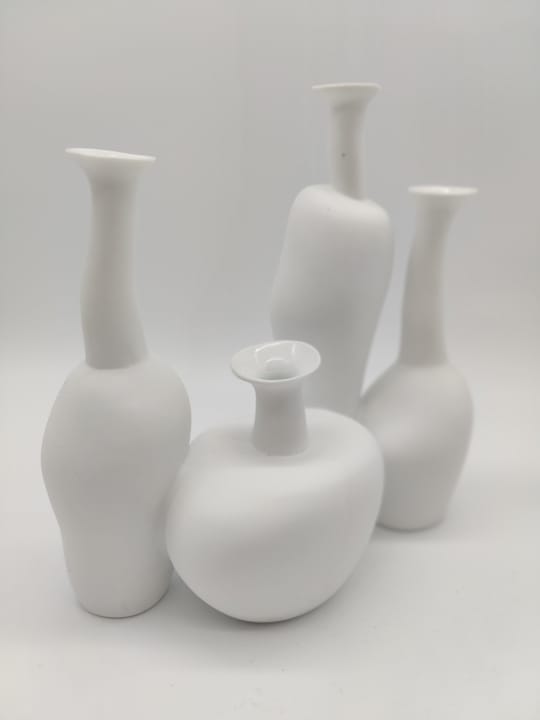
The conventional advice also underrates maintenance as a design factor. American homes with pets, dry winter heat, or long stretches without anyone home benefit enormously from displays that don’t need water changed or stems trimmed. A dried branch arrangement or an empty sculptural vase looks the same in January as it did in September.
If I had to prioritize one thing for a reader starting from scratch, it’s this: buy the vase for its shape first, worry about filler second. A plain vase dressed up with clever styling still reads as plain. A vase with real character, the kind you find in hand-thrown porcelain, carries a room even when it’s sitting there empty.
— Alan
Bring Home a Vase Worth Leaving Empty
If the idea of a vase that looks finished without any filler at all appeals to you, Myspinshop is where that search ends. Every piece is designed in-house and hand-produced using traditional Chinese porcelain techniques, so you’re getting a silhouette and glaze with real character instead of a shape stamped out by the thousands.
That matters most for readers who want low-maintenance decor that still looks curated. No watering schedule, no wilting, no weekly trip to restock flowers, just a vase that holds its own on a console table or mantel year-round. For gift-giving or your own home, the tea lover’s gift collection pairs beautifully with a standalone vase if you’re building out a full tablescape. Browse the current shapes and glazes, pick the silhouette that matches your space, and place your order today.
Sources
-
10 Creative Ways to Decorate with Empty Vases | Shades 4 Seasons
-
25 Unique Vase Decoration Ideas for Every Style and Season – CharmyDecor