
Decorative Bowl Styling: Rules for a Balanced Tabletop

Use the one-third rule for scale, the Rule of Three to fill your bowl, and pick material to match mood. Nail those three and your bowl reads as intentional, not accidental. Start here:
-
Measure your surface, then choose a bowl that spans roughly one-third of its width.
-
Pick a filler recipe with a dominant piece, a textural accent, and one contrast item.
-
Match material to the room’s tone. A handcrafted porcelain piece from Myspinshop, filled with smooth river stones around a single votive, works on almost any console.
Key Takeaways
A decorative bowl looks intentionally styled when its size follows the one-third rule, its contents follow the Rule of Three, and its material matches the room’s mood.
| Point | Details |
|---|---|
| Size the bowl correctly | Choose a bowl that spans about one-third the width of the surface it sits on. |
| Fill with three categories | Use one dominant filler, one textural accent, and one contrasting piece, never more. |
| Match material to mood | Wood reads warm, marble reads formal, and porcelain fits nearly any room style. |
| Add vertical companions | Pair the bowl with a taller object like a candle or small vase to avoid a flat look. |
| Consider handcrafted porcelain | Myspinshop’s Ru-Kiln Style Japanese Deep Bowl and Jade Pendant Bowl show how restraint and material choice apply the one-third rule and Rule of Three in real pieces. |
Bring These Rules Home With Handcrafted Porcelain
Once you know the one-third rule and the Rule of Three, the only thing left is finding a bowl worth building the vignette around. Myspinshop makes that part easy: every piece is hand-produced using traditional Chinese porcelain techniques, so no two bowls carry the exact same glaze variation, which is the opposite of the mass-produced pieces filling most big-box shelves.
That craftsmanship gives you a piece with enough character to stand as the “low, grounding” object in a three-piece composition without needing a full filler recipe to look finished. Browse the full collection at Myspinshop and pick the bowl that anchors your next vignette.
Table of Contents
Decorative Bowl Styling Rules for Placement and Scale
Get the size wrong and nothing else about your styling matters. The one-third rule says your bowl’s diameter should occupy about a third of the surface it sits on. A console calls for a bowl about one-third its width; a side table favors a smaller bowl proportionate to roughly one-third of its surface width.
No tape measure handy? Set the bowl down and mentally split the surface into thirds. Slide the bowl until it fills roughly one section. It’s a rough eyeball trick, but it works.
-
Measure or estimate the surface width.
-
Divide by three to get your target bowl diameter.
-
Center the bowl on a dining table; offset it toward one side on a console or shelf, then anchor the other side with books or a lamp.
-
On a coffee table, keep the bowl low enough that it doesn’t block sightlines across the room.
Dining tables need a low profile so guests can still see each other over the top. Consoles benefit from asymmetry: push the bowl to one end, add a stack of books or a small vase on the other, and let a tray tie the two sides together visually.
Pro Tip: If your console already has a lamp anchoring one end, place the bowl on the opposite third rather than the center. Centering it fights the lamp for attention instead of balancing it.
Which Bowl Material Fits Your Room’s Mood?
Material does more work than color when it comes to setting a tone. A wood bowl reads warm and organic, ceramic feels clean and versatile, and glass adds lightness without visual weight. Marble and alabaster read luxe, and designers often leave those empty so the veining and shape do the talking.
Here’s a quick material-by-mood cheat sheet:
-
Wood: Best for casual, coastal, or farmhouse rooms. Avoid soaking wood bowls; wipe only.
-
Ceramic or porcelain: Fits nearly any style, from minimalist to traditional. Durable enough for daily handling, and a good pick if kids or pets share the space.
-
Glass: Great for bright, modern rooms; shows dust more easily, so it needs frequent wiping.
-
Stone (marble, jade, alabaster): Reads formal and expensive. Heavy, so check shelf weight limits before placing one up high.
-
Woven or rattan: Adds texture to bohemian or relaxed spaces; not ideal for humid bathrooms.
-
Metal: Suits industrial or glam rooms; can scratch easily, so skip it for high-traffic catchall spots.
For cohesion, echo the bowl’s finish somewhere else on the same surface. A jade bowl next to a small jade or green-toned object ties the vignette together without looking like a matched set.
Filler Recipes and the Rule of Three
An overstuffed bowl looks like a junk drawer. The fix is the Rule of Three: one dominant element, one textural accent, one visual contrast. That’s it. Three categories, not three objects, so you can scale each up or down depending on bowl size.
Try these combinations:
-
Natural: River stones (dominant), a piece of driftwood (accent), one small air plant (contrast).
-
Bright citrus: Lemons or limes (dominant), a sprig of eucalyptus (accent), a single white candle (contrast).
-
Cozy: Pinecones (dominant), mini pumpkins or acorns (accent), a wrapped candle (contrast).
-
Playful: Colorful glass spheres (dominant), a few feathers (accent), one metallic ornament (contrast).
-
Green: Moss balls (dominant), preserved eucalyptus stems (accent), a small ceramic figurine (contrast).
Two five-minute seasonal swaps worth keeping in your back pocket:
-
Summer: swap in citrus and a green sprig for an instant refresh.
-
Fall: swap in pinecones and a wrapped candle ring for a cozy shift with almost no effort.
Footed bowls make these swaps even faster since the added height means fewer items look intentional rather than sparse.
Room-by-Room Decorative Bowl Placement Ideas
The same three rules play out differently depending on the surface.
-
Coffee table: Because it’s viewed from every angle, pair a low bowl with a stack of books and one small sculptural object for an asymmetric arrangement that reads well from the couch or the doorway.
-
Dining table: Keep it low and non-obstructive, centered, and skip fragrant fillers that compete with food. A bowl 12 to 16 inches wide suits most six-seat tables.
-
Entry console: Offset the bowl and add a tray underneath to keep keys and mail from spreading across the surface.
-
Kitchen island: Go functional and decorative at once. Real fruit in a wide porcelain bowl does double duty as a snack station and a color pop.
-
Dresser: A smaller bowl makes an easy catchall for rings and watches, styled next to a framed photo for scale.
-
Open shelving: Place the bowl at the front edge so it anchors the shelf and doesn’t get lost behind taller items.
-
Bathroom vanity: A shallow bowl holding rolled soaps or floating candles adds a spa touch without eating counter space.
For hosting, swap everyday fillers for something more polished. A dining-table bowl of dried lavender can become a bowl of fresh citrus or fresh-cut greens for the evening, then swap back the next morning.
How to Layer Bowls With Companion Objects
Designers lean on a three-piece composition: something tall for lift, the bowl for grounding, and a medium object to connect the two heights. A candlestick, the bowl, and a small framed print covers all three in one glance.
-
Use a tray to corral the grouping and keep it from looking scattered.
-
Stack two books under the medium object to nudge its height closer to the tall piece.
-
Alternate finishes across the surface rather than repeating the same one twice in a row.
Sharing one finish or color between the bowl and one nearby object pulls the whole vignette together without making it feel matched on purpose.
Pro Tip: A bowl on its own almost always looks unfinished. Give it one companion with vertical lift, even something as simple as a taper candle, and the whole grouping suddenly reads as designed.
Common Decorative Bowl Styling Mistakes to Fix
Most bowl problems trace back to one of three issues, and each has a fast fix.
-
Overfilled bowl: Remove everything, then add back only a dominant piece, an accent, and a contrast item. Stop there.
-
Wrong scale: If the bowl looks small on its surface, set it on a pedestal or stack of books to add visual weight. If it looks too big, flank it with two smaller bowls to break up the mass.
-
No companions: A lonely bowl reads flat. Add one taller object, like a candle or bud vase, for instant vertical interest.
-
Fragrant fillers on dining tables: Swap scented items for dried botanicals or citrus, since strong scents compete with food.
These fixes take minutes, not a full redecorating session.
Styling MySpinShop Bowls: Rules in Action
Seeing the rules applied to real pieces makes them stick faster than any checklist. The Ru-Kiln Style Japanese Deep Bowl has enough depth to hold a natural filler recipe (stones, a small driftwood shard, one air plant) while still meeting the one-third rule on a standard console.
-
The White Glaze Folded Square Bowl works best left mostly empty or holding just a few glass spheres. Its folded edges are the visual interest, so less filler keeps the form as the focal point.
-
The Jade Pendant Bowl carries its own color story. A single dried branch is enough contrast; overfilling it competes with the stone’s natural pattern.
Each Myspinshop piece is hand-produced using traditional Chinese porcelain techniques, which is exactly why a sculptural bowl like the Jade Pendant often looks better with restraint than with a full filler recipe. The craftsmanship is the styling.
Lighting Considerations for Highlighting Decorative Bowls
Light changes how a bowl reads more than almost any other variable. A glazed ceramic bowl under warm, low light picks up soft highlights along its curves, while the same bowl under harsh overhead light can look flat and washed out.
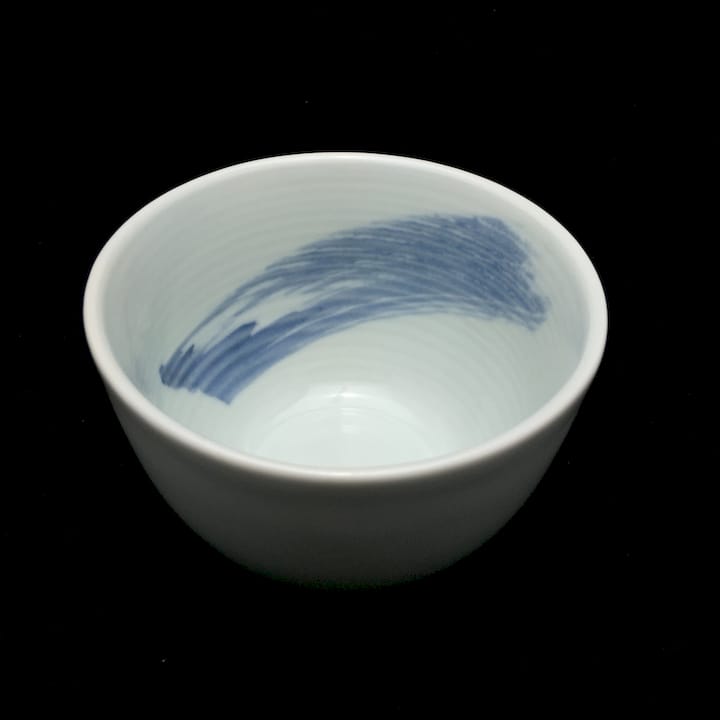
Overhead lighting works fine for general visibility, but it rarely flatters a bowl’s texture. A table lamp positioned slightly to the side of the vignette, rather than directly above it, throws shadow across the bowl’s contours and makes the material more visible. This matters most for stone and woven bowls, where texture is the whole point.
Candlelight is the easiest upgrade for evening styling. Placing a votive or taper near a bowl creates movement in the shadows across its surface, and the placement of that candle relative to the bowl changes the entire atmosphere of the vignette, not just its brightness. A candle set too close can wash out the bowl’s edge; set a few inches away, it defines it.
Natural light deserves attention too. A bowl on a console that catches morning sun looks different by evening, so if you’re styling for photos or for guests arriving at a specific time of day, check how the light actually hits the surface before finalizing your filler choice. Glass and glazed porcelain bowls, in particular, catch and bend natural light in ways that matte materials never will.
Maintenance Tips to Keep Decorative Bowls Looking New
Different bowl materials demand different care, and using the wrong method is the fastest way to dull a good piece.
Glazed ceramic and porcelain bowls hold up well to a damp cloth and mild soap. Avoid abrasive scrubbers, which can scratch the glaze over time and leave the surface looking cloudy instead of glossy. Dry thoroughly after cleaning to prevent water spots, especially on darker glazes where mineral deposits show up more visibly.
Wood bowls need the opposite approach. Water is the enemy here, so wipe with a barely damp cloth and follow with a food-safe mineral oil every few months to keep the wood from drying out and cracking. Never submerge a wood bowl or run it through a dishwasher.
Stone bowls, including marble and jade, are porous enough that spills can stain if left sitting. Wipe up any liquid quickly and avoid acidic cleaners like vinegar, which can etch the surface. A dry microfiber cloth handles most dust.
Glass and metal bowls are the easiest to maintain: a quick wipe removes dust, and an occasional polish keeps metal from developing tarnish. For any bowl on display rather than in daily use, a weekly dusting is usually enough to keep it looking intentional rather than neglected.
Seasonal and Holiday Decorative Bowl Styling Ideas
Swapping fillers by season keeps a bowl from going stale, and it’s the fastest styling update in the house. A starter kit with a few reusable staples, like moss balls, faux citrus, and a couple of votive candles, means most swaps take just a few minutes.
For spring, light and fresh wins: pastel eggs, faux tulips, or a few sprigs of greenery in a shallow ceramic bowl. Summer calls for citrus, whether real lemons and limes or faux versions that hold up longer on a sunny console. Fall is pinecones, mini gourds, and a candle ring, especially effective in a wood or stoneware bowl that already reads warm.
Winter and the holidays give you the most room to play. Ornaments in a metallic or glass bowl catch the light from string lights or a nearby tree. Cranberries and rosemary sprigs work in a wider ceramic bowl for a centerpiece that smells as good as it looks, though keep that combination off the dining table itself if guests are eating nearby.
Footed bowls are worth the investment for anyone who swaps seasonally often, since the added height means even a light filler load looks finished rather than sparse.
How to Match Color Schemes With Decorative Bowls
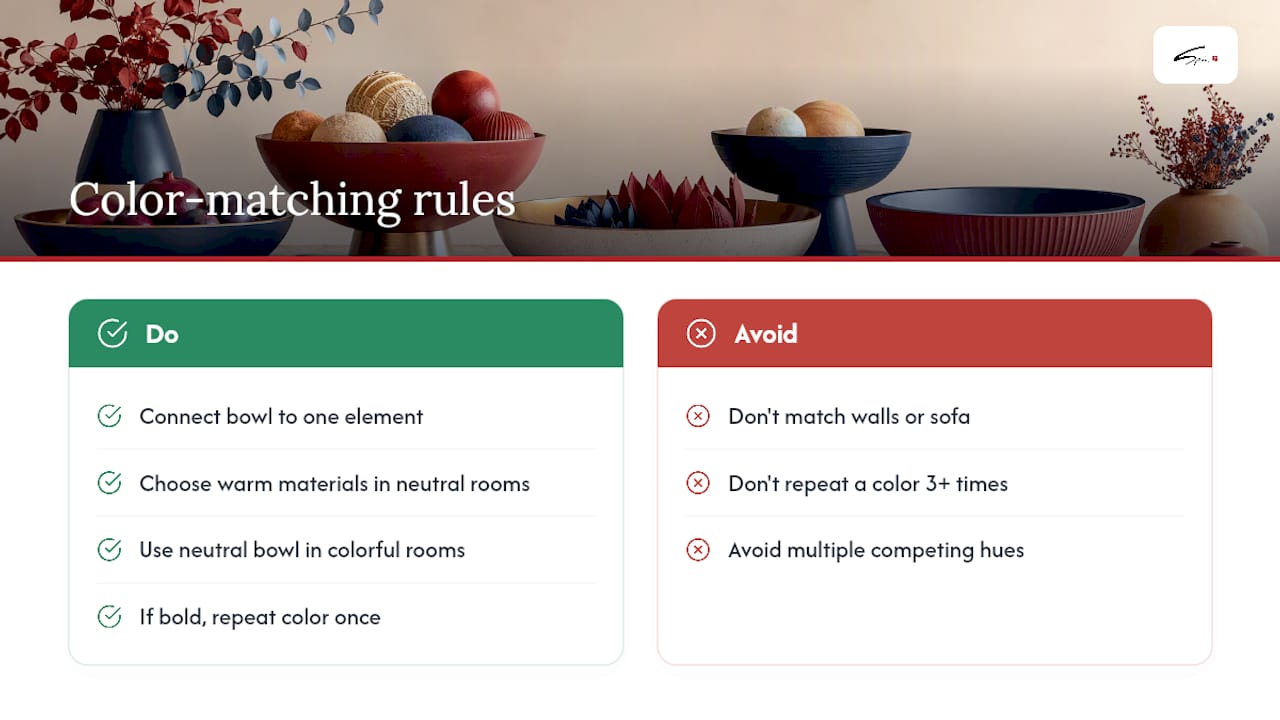
Color is where a lot of home decorators overthink things. The bowl doesn’t need to match your walls or your sofa. It needs to connect to one other element in the room, whether that’s a throw pillow, a piece of art, or the wood tone of the table it sits on.
Neutral rooms benefit from a bowl in a warm material like terracotta or wood, which adds depth without introducing a new color. Rooms that already lean colorful do better with a neutral bowl, ceramic in white or stone in gray, so the bowl doesn’t compete with everything else going on.
If you want the bowl itself to be the color statement, pick one bold hue and repeat it in exactly one other spot on the same surface, whether that’s a candle, a small vase, or a coaster stack. Repeating a color three or more times starts to look like a themed display instead of a curated one.
Monochrome pairings, like a white bowl against warm wood tones, tend to photograph and read better in person than high-contrast color clashes. That’s part of why so many minimalist porcelain vase and bowl setups lean toward one dominant neutral with a single accent color, rather than multiple competing hues.
A Working Decorator’s Take on Bowl Styling
Most people overthink bowl styling and underthink scale. Fillers can be swapped in five minutes, but a bowl that’s the wrong size for its surface never looks right no matter what’s inside it. My habit: keep a small seasonal filler kit in a drawer nearby so a refresh takes less time than making coffee.
— Alan
Sources
-
How to Decorate a Footed Bowl: 5-Minute Seasonal Styling Ideas — Perfecting Places
-
How to Style Decorative Bowls, Vases, and Objects | Z Gallerie
-
30 Decorative Bowl Ideas for Beautiful Tabletop Styling — Restored Style