
US Home Decorators: Master Vase Shapes, Porcelain Sizing, 1/3 Rule

Six vase shapes cover almost every arrangement you’ll ever build: the bud/bottle, the cylinder, the round or bubble bowl, the amphora/urn, the classic bowl, and the trumpet or tapered form. The rule that matters more than any of them is proportion: match the shape to where it’s going to live, then size it using the one-third rule, so stems rise roughly a third above the vase’s rim. Everything else, from material to glaze, is detail layered on top of that decision.
TL;DR:
The one-third rule is essential: choose a vase where flowers rise about a third above the rim to achieve proportion and visual balance.
Narrow-necked shapes like bud and bottle vases help flowers stay upright and stay fresher longer by limiting water evaporation and bacterial growth.
Glass and glazed ceramics are the most practical materials for daily use, with glazed interiors ensuring better water retention and long-term durability.
Shape matters: wide, shallow bowls require more frequent water changes, while tall, structural shapes support longer-lasting stems and better water coverage.
Proper sizing, material, and shape selection are more critical than style trends, with function guiding the best choice for longevity and arrangement success.
Table of Contents
Vase Shapes Guide: The Common Silhouettes and What Each One Does Best
Most vase confusion comes down to not knowing what a shape is actually engineered for. A narrow-necked bottle vase restrains stems the same way a wide bowl lets them sprawl, and once you see the mechanics, choosing gets a lot faster. Here’s the shape-by-shape breakdown that covers nearly every arrangement you’ll build at home.
-
Bud vase. A slim body with a tight neck, built for one or two stems. Best for a single rose or a sprig of eucalyptus on a nightstand or bathroom shelf. The narrow opening does the arranging for you, since there’s no room for stems to flop sideways.
-
Bottle vase. Taller cousin of the bud vase, with a long throat and a rounded or flat base. Works well for two or three long-stemmed flowers like tulips or ranunculus, and looks sharp lined up in a trio on a console.
-
Cylinder vase. Straight sides, consistent diameter top to bottom. This is the workhorse shape for pairing with roses or tulips because the walls hold stems upright without extra floral foam. A mid-height cylinder is also the safest choice for a kitchen counter, since it won’t tip easily.
-
Round or bubble vase. A spherical or globe-like body, often with a smaller opening at the top than the belly. Flowers with big, blowsy heads, think hydrangea or garden roses, look right at home here because the curve supports the weight.
-
Bulbous bowl vase. Wide and low, sometimes wider than it is tall. This is your dining table centerpiece shape, since it keeps the arrangement below eye level and preserves sightlines across the table.
-
Amphora or urn vase. Two curved handles, a wide shoulder, and a narrower base, borrowed straight from ancient pottery. These read as sculptural even when empty and suit dramatic branch arrangements or dried grasses more than delicate stems.
-
Trumpet or tapered vase. Narrow base flaring out to a wide mouth. Built for a loose, fan-shaped spray of flowers, and it reads tall and elegant on a mantel without eating up much floor or shelf space.
-
Hurricane or cylinder-with-flare vase. A straight body that kicks outward near the top. Handles mixed-height bouquets better than a pure cylinder because the flare gives outer stems room to lean.
-
Footed vase (compote style). A bowl set on a pedestal or stem. Raises a low arrangement to table height, which is handy on a sideboard where you want visual lift without going full-size.
-
Basket or low boat vase. Long, shallow, and often oval. Suited to a runner-style arrangement down the center of a long table, especially for a holiday spread.
-
Square or cube vase. Straight geometric sides. Reads modern and works particularly well with monochrome or all-green arrangements where the container’s clean lines do the styling work.
-
Pitcher or jug vase. A spout and often a handle, borrowed from functional pottery. Casual by nature, and it suits garden-cut flowers like zinnias or cosmos better than formal florist bouquets.
One caveat across several of these: an unglazed ceramic or a porous material isn’t built to hold fresh water long term. If a shape you love comes unglazed, plan on a glass liner or reserve it for dried and faux stems.
Which Vase Material Actually Fits Your Flowers?
Shape gets the attention, but material decides whether a vase actually works day to day. Glass is the default for a reason: it’s fully waterproof, shows off stem structure, and costs little to replace if it chips. The tradeoff is that it shows algae and cloudy water fast, so it demands more frequent cleaning than opaque materials.
Glazed ceramic and porcelain solve the visibility problem while staying watertight, as long as the glaze covers the interior completely. That’s the detail worth checking before you buy: a piece glazed only on the outside will weep through the clay walls over time. Ceramics makes the point that with ceramics, silhouette often matters more than color, and the interior finish is what determines whether a piece can hold fresh stems at all.
Unglazed stoneware and terracotta are porous. They’re gorgeous for dried arrangements, pampas grass, or preserved branches, but skip them for fresh flowers unless you’re using an interior glass liner. Metal vases, brass, copper, iron, bring weight and a warm patina but can react with acidic flower water over time, so a liner is smart there too. Wood vessels are almost always meant for dried material only. Stone and concrete planters split the difference: heavy and stable, but check for a sealed interior before adding water.
Care differs by material as much as by shape. Glass and glazed ceramic tolerate a vinegar rinse to knock out bacterial film. Unglazed pieces should stay dry between uses. And any glazed porcelain piece deserves a gentle hand with temperature: pouring ice water into a piece that’s been sitting in a warm room risks thermal shock and hairline cracks.
The Sizing Rules Every Arrangement Depends On
Get the proportions wrong and even the right shape looks off. The fix is one ratio and a handful of placement rules.
-
Apply the one-third rule. Measure your stems, then choose a vase where the flowers rise roughly one-third above the rim, leaving two-thirds of the visual weight in the vessel and greenery below the lip line.
-
Match height to the surface. A dining table benefits from low, wide vases to keep sightlines clear. Coffee tables can handle somewhat taller vases if seating is set back. Mantels and console tables accommodate taller vases without blocking views.
-
Check the footprint, not just the height. A tall, narrow vase on a busy console needs a wide enough base to resist tipping when someone brushes past.
-
Size the neck to the stem count. A narrow neck controls three stems beautifully; the same neck crowds fifteen. Wide-mouth shapes need floral frogs or tape grids to keep stems from sliding into a clump.
-
Group with intention. When clustering multiple vases, keep them in odd numbers and vary the height slightly while keeping the material consistent, which keeps a grouping from feeling like leftover mismatched pieces.
How to Choose a Vase Without Guessing: A Shopping Checklist
Before you add anything to cart, run through what the vase actually needs to do. A little friction here saves a return shipment later.
-
Intended use. Fresh cut flowers daily, an occasional dried arrangement, or mostly decorative when empty?
-
Placement. Dining table, entry console, mantel, bedside, or open shelving each call for a different height and footprint.
-
Stem length. Measure your typical bouquet stems before shopping, not after the vase arrives.
-
Mouth width. Narrow for a handful of stems, wide for a full garden-style bouquet.
-
Waterproofing. Confirm the interior glaze or liner status on the product page, or ask in-store if it’s not listed.
-
Footprint and stability. Wider base needed for taller, top-heavy pieces, especially near foot traffic or curious pets.
-
Material and care. Glass for easy cleaning, glazed porcelain for a balance of beauty and function, unglazed or wood for dried-only display.
Pro Tip: Roll a sheet of kraft paper or an old magazine to your expected stem length and hold it over a candidate vase right in the store. It tells you more about real proportion than staring at a product photo ever will.
Questions worth asking a product page or a sales associate: Is the interior fully glazed? What’s the base diameter versus the overall height? Is this piece rated for daily fresh-water use, or intended for dried and faux stems only?
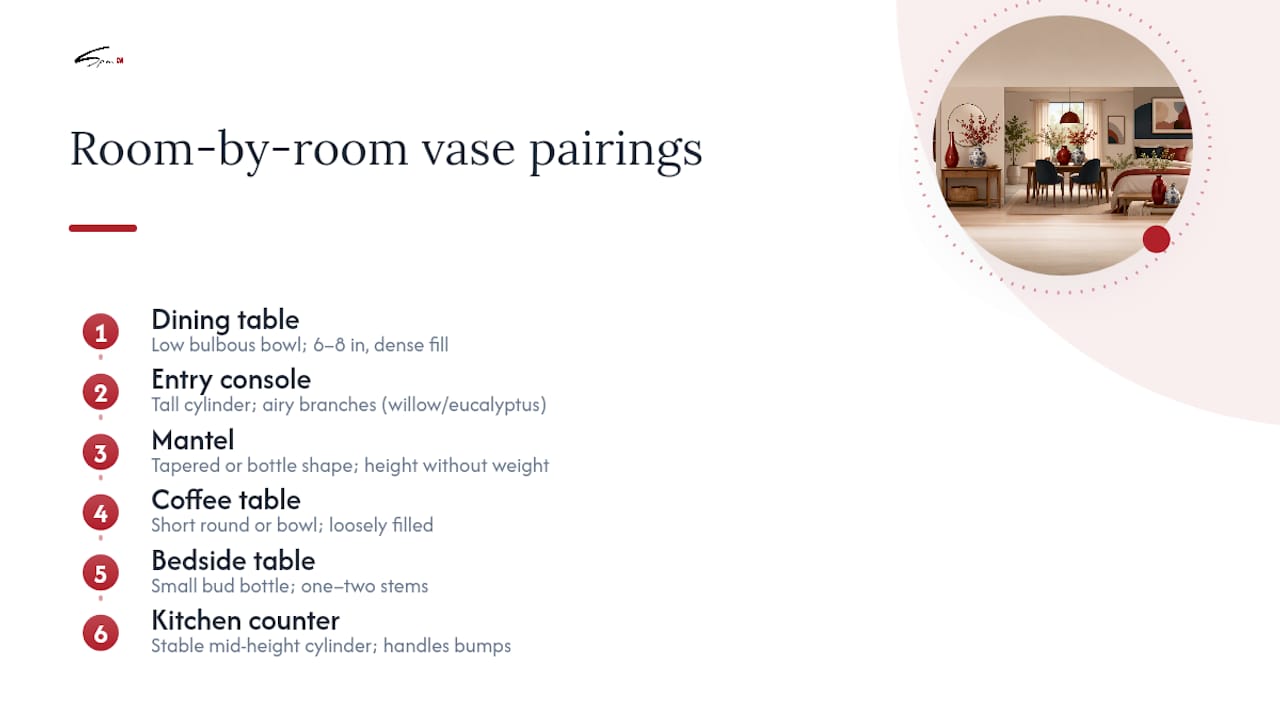
Styling Recipes You Can Copy Room by Room
Pick the room first, then let the shape follow. These pairings come straight from how each shape behaves once flowers are in it.
Dining table: A low bulbous bowl, 6 to 8 inches tall, filled densely with garden roses or ranunculus. Keeps every sightline clear across the table.
Entry console: A tall cylinder, paired with airy branches like curly willow or eucalyptus, so the arrangement reads as texture rather than mass from across the room.
Mantel: A tapered or bottle shape gives you height without visual weight, ideal flanking a mirror or artwork.
Coffee table: A short round or bowl vase, loosely filled, works better than anything tall since guests need to see over it.
Bedside table: A single bud or small bottle vase with one or two stems. Anything bigger competes with a lamp and a book stack.
Kitchen counter: A stable mid-height cylinder holds up to daily bumps and still looks intentional next to a cutting board.
When grouping vases anywhere in the house, designers consistently recommend odd numbers with varied heights but matching material, which keeps a cluster feeling curated instead of accidental. Density matters too: a loose, airy bouquet suits a wide-mouth trumpet shape, while a tight, monochrome cluster reads best in a cylinder or cube.
What Handcrafted Porcelain Adds to Vase Styling
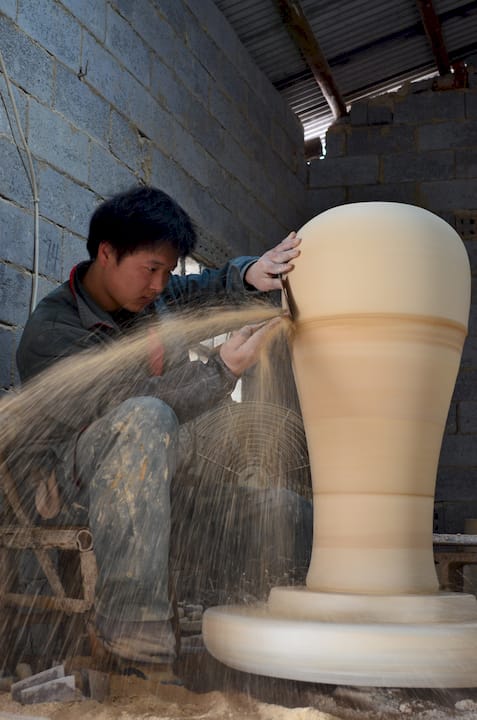
Mass-produced vases are stamped from a mold, which means every unit is identical and the glaze is often applied by machine. Myspinshop builds each piece by hand, and that changes what the vase can do in a room. A hand-thrown body holds slightly asymmetric curves that catch light differently than a factory-perfect cylinder, and a fully hand-glazed interior means the piece is genuinely ready for fresh water, not just display.
A few porcelain-specific notes worth keeping in mind:
-
Pair a narrow porcelain neck with three to five stems; wider necks handle a fuller garden-style bouquet without stems collapsing sideways.
-
Clean glazed porcelain with a soft cloth and mild soap, never abrasive scrubbers that can dull the glaze over time.
-
Reserve unglazed or textured porcelain finishes for dried stems or as a display object, and use glazed pieces for anything holding fresh water.
Browsing Myspinshop’s vase collection gives a sense of how sculptural these forms look even without a single stem in them.
Why These Shapes Have Lasted for Thousands of Years
The amphora and urn shapes trace back to ancient Greek and Mediterranean pottery, where the narrow neck and wide shoulder served a functional purpose: carrying and storing oil or wine without spilling. Related terms like hydria and krater show up in historical vase glossaries because different neck widths and handle placements once signaled different practical uses, not just decoration.
Chinese porcelain-making, the tradition Myspinshop draws from directly, developed its own vocabulary of shapes over centuries, from the meiping’s narrow shoulder and small mouth (originally designed to hold a single plum branch) to the rounder, fuller forms used for ceremonial display. These shapes weren’t arbitrary. A narrow mouth kept dust out and controlled evaporation; a wide belly signaled abundance and was often reserved for formal occasions.
What’s interesting is how directly that history still shapes modern buying decisions. The trumpet and tapered forms popular in home decor today echo the flared vessels used for temple offerings, and the appeal of a bulbous or bowl shape for a dining table centerpiece isn’t far removed from its original role as a display piece meant to be seen, not just used. Choosing a shape rooted in that history brings a little of that cultural weight into a modern room.
The Real Reason Shape Affects How Long Flowers Last
A narrow neck does more than control how stems splay. It also limits how much air reaches the water surface, which slows evaporation and keeps bacteria growth a little more contained compared to an open bowl shape holding the same volume. That’s part of why bud vases and bottle vases tend to keep single stems fresher for longer stretches than a wide-mouth bowl holding the same flower.
Wide, shallow shapes like a bulbous bowl or a low centerpiece vase expose more water surface area to air and light, which speeds up both evaporation and bacterial buildup. That doesn’t make them the wrong choice, a dining table simply calls for that low profile, but it does mean the water needs changing more often, roughly every two to three days instead of once a week.
Depth matters too. A tall cylinder or trumpet shape supports long stems structurally, keeping them upright so the bottom inch or two stays fully submerged, which is where most water uptake happens. A shallow dish, by contrast, can leave stem ends barely covered, which shortens vase life regardless of how fresh the flowers were at purchase.
The practical takeaway: if longevity matters more than the look on a given day, lean toward a narrower-necked shape and commit to changing the water on a shorter cycle for anything wide and shallow.
Cleaning and Care by Vase Shape
A narrow-necked bud or bottle vase is the hardest shape to clean by hand, since a standard bottle brush often can’t reach the widest part of the belly. A handful of uncooked rice with warm soapy water, shaken vigorously, works as a mechanical scrub in these tight spaces. Wide-mouth shapes like bowls and cylinders are simple: a sponge and mild dish soap handle them in seconds.
Glazed porcelain and ceramic tolerate normal washing but should avoid sudden temperature swings, so let a piece that’s been in a cold room warm up before running hot water through it. Unglazed and textured pieces should stay dry inside; wipe the exterior only, since water absorbed into porous clay can lead to staining or mineral buildup that’s tough to reverse. Metal vases benefit from drying thoroughly after every wash to prevent tarnish or rust at the base seam.
What Actually Matters When You’re Choosing a Vase
Most vase advice online treats shape as a style question, something you pick based on what looks trendy in a photo. That’s backward. Shape is a functional decision first, and style is what you get once the function is right. The one-third rule and the placement logic in this guide aren’t aesthetic suggestions; they’re the difference between an arrangement that reads as effortless and one that looks like it’s fighting its container.
The overrated piece of conventional wisdom is that a “statement vase” needs to be huge to make an impact. A well-proportioned bud vase on a console, paired correctly with stem length, often reads more intentional than an oversized urn crammed with mismatched stems. Scale relative to the room beats scale for its own sake; for tips on matching silhouette to your space, see How Do I Choose An Interior Door Style? | One Day Doors & Closets.
If you take one thing from this guide, prioritize the neck width and the interior glaze before you fall for a silhouette. A gorgeous shape that can’t safely hold fresh water, or that crowds every stem into a clump, will frustrate you faster than a plainer piece that’s sized and glazed correctly. Function first. Style follows naturally once the proportions are right.
— Alan
Ready to bring one of these shapes into your own space? Myspinshop’s hand-glazed porcelain pieces, including favorites in the gifts for tea lovers collection, are built for exactly this kind of everyday styling, sized and finished to hold fresh stems without a liner.